
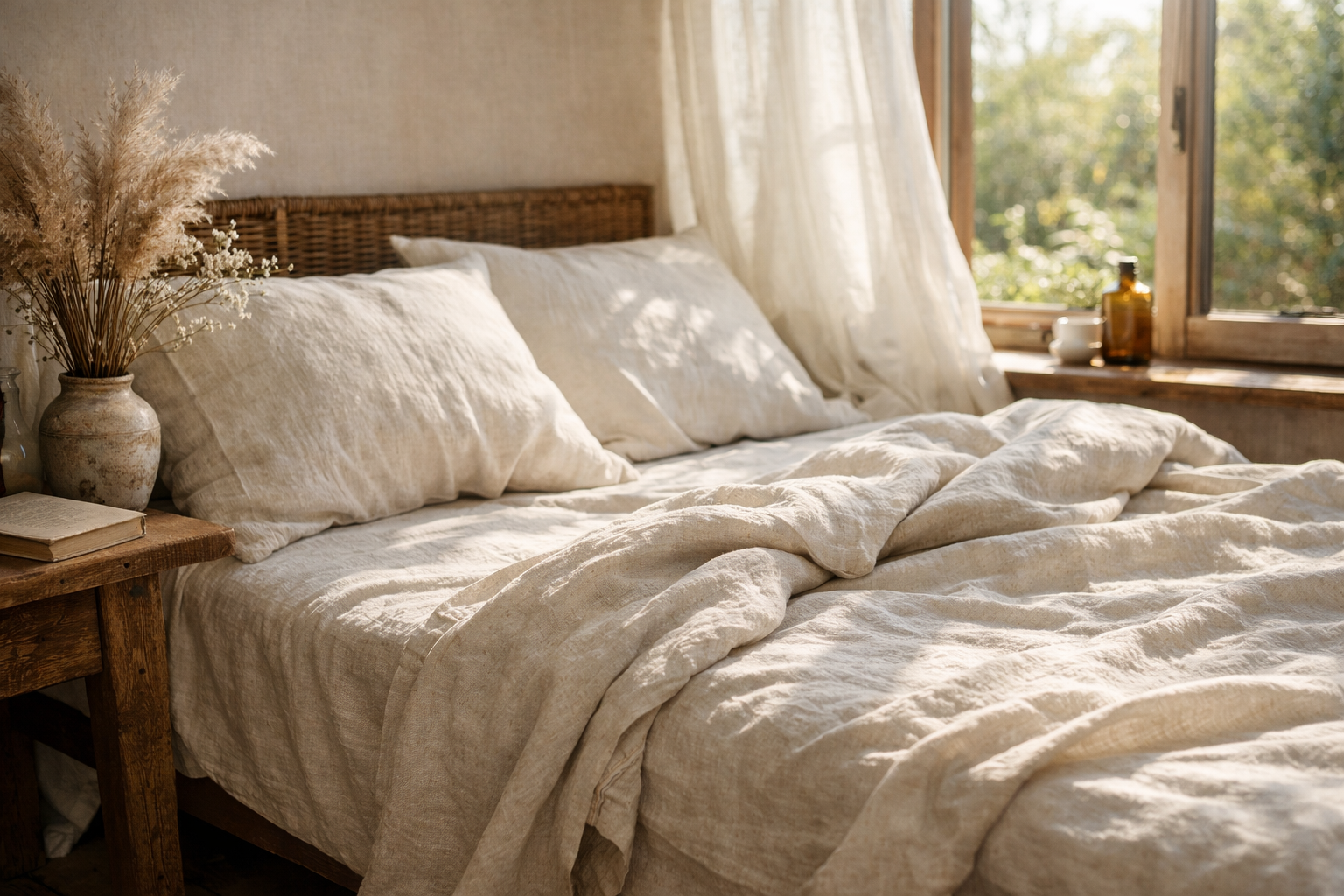
Therapeutic property of pure linen sheets and bedding
Why What We Wear and Sleep In Shapes Our Health
Diet forms one segment of a healthy lifestyle. It fuels the cells, regulates hormones and determines metabolic resilience. Yet nourishment extends beyond the plate. The body lives in constant dialogue with its environment. What touches the skin for eight hours every night influences temperature regulation, inflammation, sleep depth and recovery. Clothing and bedding, therefore, become part of physiology.
Health is an ecosystem. Food, light, air, movement, textiles. Each element either supports equilibrium or disrupts it.
Among natural materials, linen could be sitting on the throne of health-supporting fabrics!
Linen as a Living Fibre
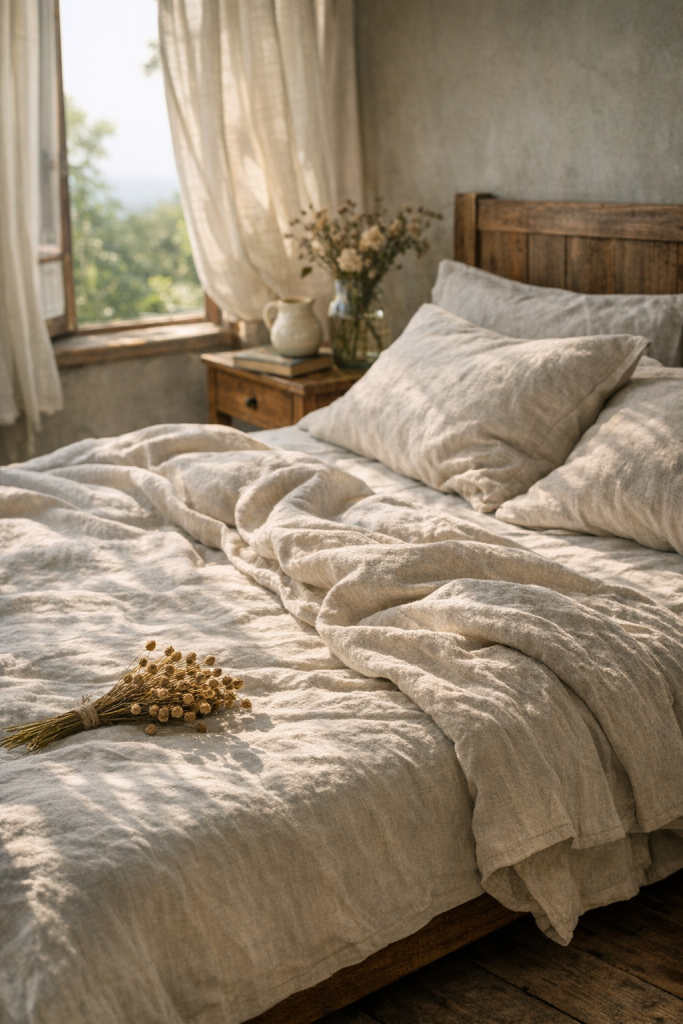
Linen originates from the flax plant, a crop cultivated for thousands of years across Europe and the Mediterranean. Its fibres carry structural integrity and breathability in equal measure. When woven into bedding, linen creates a stable microclimate around the body.
During sleep, core temperature gradually drops. The skin releases moisture, even in the absence of visible perspiration. Linen absorbs this moisture and allows it to evaporate efficiently, maintaining a dry and balanced surface. The result is steadier thermoregulation and fewer subtle arousals during the night.
For individuals prone to night sweats, sensitive skin or disrupted sleep cycles, this shift in microclimate can translate into deeper and more restorative rest.
Skin, Recovery and Textile Contact
The skin represents the largest organ of the body and remains in direct contact with bedding for prolonged periods. Textile choice influences friction, airflow and humidity at the surface level.
Linen fibres allow continuous air circulation. This supports the natural barrier function of the skin and reduces the warm, humid conditions in which irritation tends to flourish. In dermatological contexts, breathable natural fibres are frequently recommended for individuals managing eczema, folliculitis or inflammatory skin conditions.
A supportive sleep environment enhances overnight recovery. Growth hormone secretion, tissue repair and immune modulation all occur during deeper stages of sleep. Stable thermal conditions assist the body in entering and maintaining those phases.
Historical Perspective and Hygiene
Across European households, linen sheets once formed part of a bride’s dowry, valued for durability, cleanliness and longevity. Sun drying, high temperature washing and repeated use improved their texture over time. Linen tolerated rigorous hygiene practices, a vital feature during periods when infectious disease demanded strict textile care.
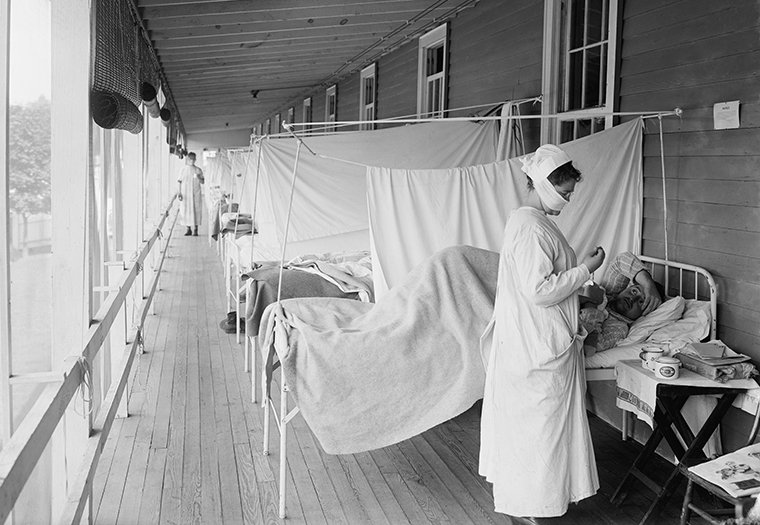
During the 1918 influenza pandemic, public health guidance emphasised ventilation, sunlight exposure and careful laundering of bedding. Linen’s resilience under such conditions contributed to its widespread presence in both domestic and clinical settings.
Tradition often carries embedded wisdom. Modern physiology simply offers language to explain it.
The Modern Bedroom and Microclimate Balance
Contemporary textiles frequently combine natural and synthetic fibres to enhance stretch or reduce cost. Such blends alter airflow and moisture dynamics. Linen, in contrast, preserves structural breathability without reliance on chemical finishes.
With each wash, quality linen softens while maintaining strength. Its performance depends on the integrity of the fibre itself rather than surface treatments.
A bedroom designed with natural materials, adequate ventilation and light exposure becomes an extension of metabolic care. Nutrition shapes internal chemistry. Textile environment shapes nightly recovery.
An Integrated View of Lifestyle
Greek Goes Keto has long emphasised ancestral wisdom aligned with modern science. The Mediterranean pattern involves food grown in soil, sunlight exposure, seasonal rhythm and materials derived from nature. Linen sits comfortably within that framework.
Optimising health involves more than macronutrient ratios. It involves respecting the biology of the skin, circadian rhythm and thermal regulation. Bedding crafted from flax supports these systems quietly and consistently.
Food nourishes from within. Linen supports from without. Together, they create a lifestyle rooted in coherence rather than fragmentation.
In a culture seeking performance and longevity, such coherence carries measurable value.


